
The Evolution of Guitar Design: 7 Innovations That Changed the Way We Play
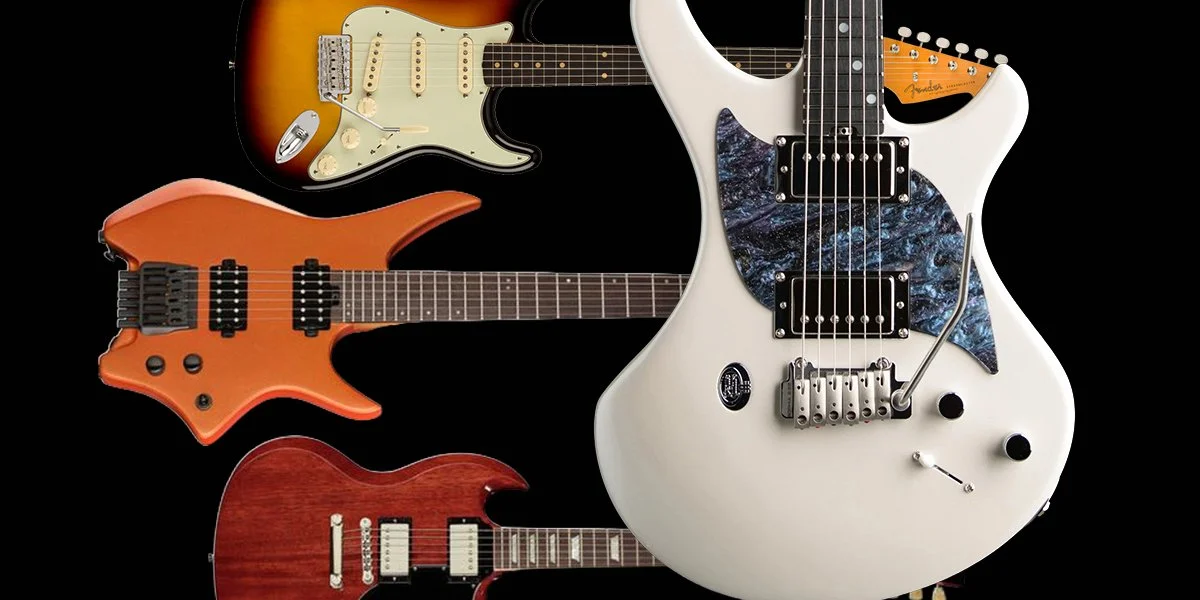
The electric guitar has come a long way since the first solid-body models appeared more than 70 years ago. Every generation of builders has tackled a different challenge—making guitars louder, more expressive, more versatile, or simply more comfortable to play.
Some innovations transformed the sound of modern music. Others changed the way a guitar feels in your hands. Together, they tell the story of an instrument that continues to evolve.
Here are seven milestones that forever changed guitar design.
The Solid-Body Electric Guitar: Building the Foundation
Before the 1950s, nearly all commercially available electric guitars were hollow or semi-hollow instruments. While they produced beautiful tones, they were prone to feedback as bands became louder and amplifiers more powerful.
Everything changed when the first commercially successful solid-body electric guitars arrived. The introduction of the Fender Telecaster in 1950 proved that a simple slab-body guitar could deliver exceptional sustain, reliability, and stage volume. Just two years later, the Gibson Les Paul introduced a thicker, richer voice that would become one of the defining sounds of rock music.
These two instruments established the blueprint that nearly every electric guitar still follows today.
Opening Up the Neck: The Double-Cutaway Revolution
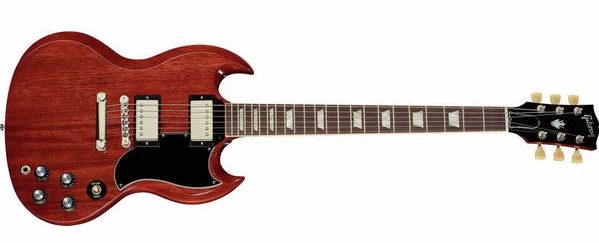
Gibson SG
As guitarists pushed the boundaries of what was possible, they needed easier access to the highest frets. Traditional single-cutaway bodies made those notes difficult to reach, particularly during fast solos.
The answer was the double-cutaway body. The Fender Stratocaster gave players unrestricted access to the upper register while offering exceptional balance and versatility. Gibson took a more aggressive approach with the SG, whose deeply sculpted horns became synonymous with hard rock. Decades later, guitars like the PRS Guitars Custom 24 refined the concept even further, blending modern ergonomics with classic aesthetics.
What seems like a subtle change in body shape fundamentally changed the way lead guitar could be played.
More Than One Sound: The Evolution of Guitar Electronics
Early electric guitars gave players only a handful of tonal options. As music diversified, musicians wanted instruments that could keep up.
One of the most important breakthroughs came in the mid-1950s, when Gibson engineer Seth Lover developed the humbucking pickup. By eliminating the electrical hum associated with single-coil pickups while producing a warmer, more powerful sound, the humbucker helped define the voice of countless classic recordings. The Gibson Les Paul quickly became one of its most iconic platforms.
Innovation didn’t stop there. Companies like EMG introduced active pickups with higher output and greater consistency, while builders such as PRS incorporated coil splitting and sophisticated switching systems that allowed a single guitar to convincingly cover everything from sparkling single-coil tones to full-bodied humbucker sounds.
Instead of bringing multiple guitars to a session or gig, many players could now rely on one instrument to do it all.
The Tremolo System Changed Expression Forever
Few inventions expanded a guitarist’s expressive vocabulary like the tremolo bridge.
Leo Fender’s synchronized tremolo on the Stratocaster allowed players to add subtle shimmer and vibrato to chords and melodies. Soon after, the Bigsby vibrato became a favorite among rockabilly, country, and early rock musicians for its smooth, musical feel.
By the late 1970s, the Floyd Rose locking tremolo pushed things even further, allowing players like Eddie Van Halen and Steve Vai to perform dramatic dive bombs and extreme pitch bends while staying remarkably in tune.
The tremolo bridge transformed the guitar from simply a stringed instrument into a powerful tool for musical expression.
Rethinking Tradition: Headless and Extended-Range Guitars
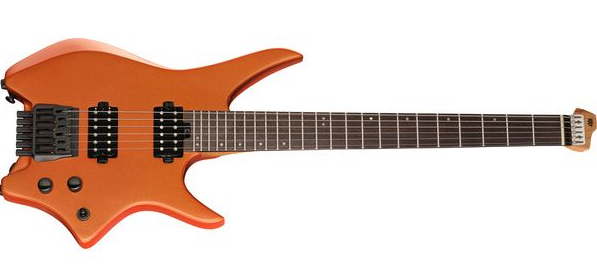
HILS
Not every innovation came from refining traditional designs. Some challenged the very idea of what a guitar should look like.
When Ned Steinberger introduced the headless guitar in the early 1980s, many players thought it looked like something from the future. By eliminating the headstock, Steinberger created an instrument that was lighter, more compact, better balanced, and often less prone to neck dive. What initially seemed radical proved that questioning long-held design conventions could lead to real performance benefits.
That spirit of innovation continues today. Companies like Strandberg have further refined the headless concept with ergonomic neck profiles and player-focused engineering, while newer builders such as HILS have explored unconventional body shapes and modern aesthetics that prioritize comfort, balance, and playability over tradition.
At the same time, manufacturers like Ibanez have expanded the instrument’s capabilities with seven- and eight-string models, giving players access to entirely new sonic territory.
These guitars may not resemble the classics that inspired them, but they share the same goal: challenging convention in pursuit of a better playing experience.
Precision Manufacturing Raises the Bar
Not every innovation is immediately visible.
Advances such as CNC machining, stainless steel frets, locking tuners, improved finishing techniques, and tighter manufacturing tolerances have dramatically improved the consistency and reliability of today’s guitars. These innovations may not change the appearance of an instrument, but they help ensure that every guitar leaving the factory performs at a higher level than ever before.
Players spend less time making adjustments—and more time making music.
Designing Around the Player: The Rise of Ergonomics
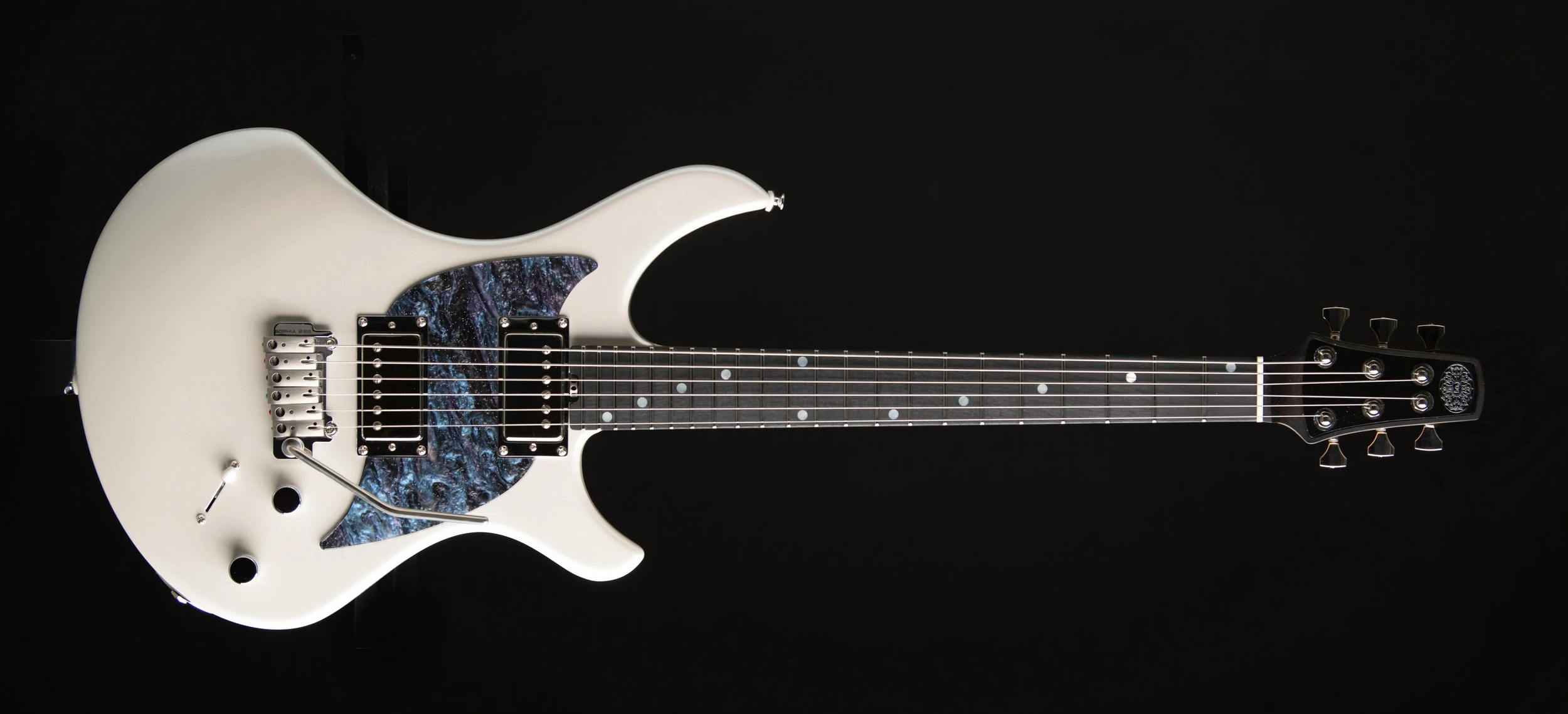
Venus Revolution
Perhaps the most significant shift in modern guitar design isn’t about tone at all—it’s about the player.
For decades, most innovations focused on making guitars louder, more versatile, or more expressive. Today, an increasing number of builders are asking a different question: How can we make a guitar that players simply don’t want to put down?
One of the earliest guitars to demonstrate what was possible was the Parker Fly. Introduced in the early 1990s, it challenged the idea that a professional instrument had to be heavy. Its lightweight construction, sculpted body, and forward-thinking engineering proved that comfort and high performance could go hand in hand.
That philosophy has continued to gain momentum. Rather than treating weight and balance as afterthoughts, modern builders are designing instruments that reduce fatigue, improve balance, and feel like a natural extension of the player.
The Venus Revolution builds on this player-first philosophy. Its lightweight construction, ergonomic body contours, and balanced design reduce fatigue, while premium hardware and electronics deliver professional performance. Just as importantly, it recognizes that players want an instrument that reflects their own style. The innovative magnetic quick-swap pickguard system lets players change the guitar’s look in seconds, while customizable finishes, bridge options, pickups, and signature body amulets allow each instrument to be uniquely personal. The result is a guitar designed not just to sound exceptional, but to fit the player—in comfort, performance, and personality.
From solving feedback in the 1950s to improving comfort for today’s musicians, every major innovation in guitar design has answered the same fundamental question: How can we help players express themselves more freely? As guitar design continues to evolve, one thing has become clear: the future isn’t just about better sound. It’s about building instruments that fit the people who play them.